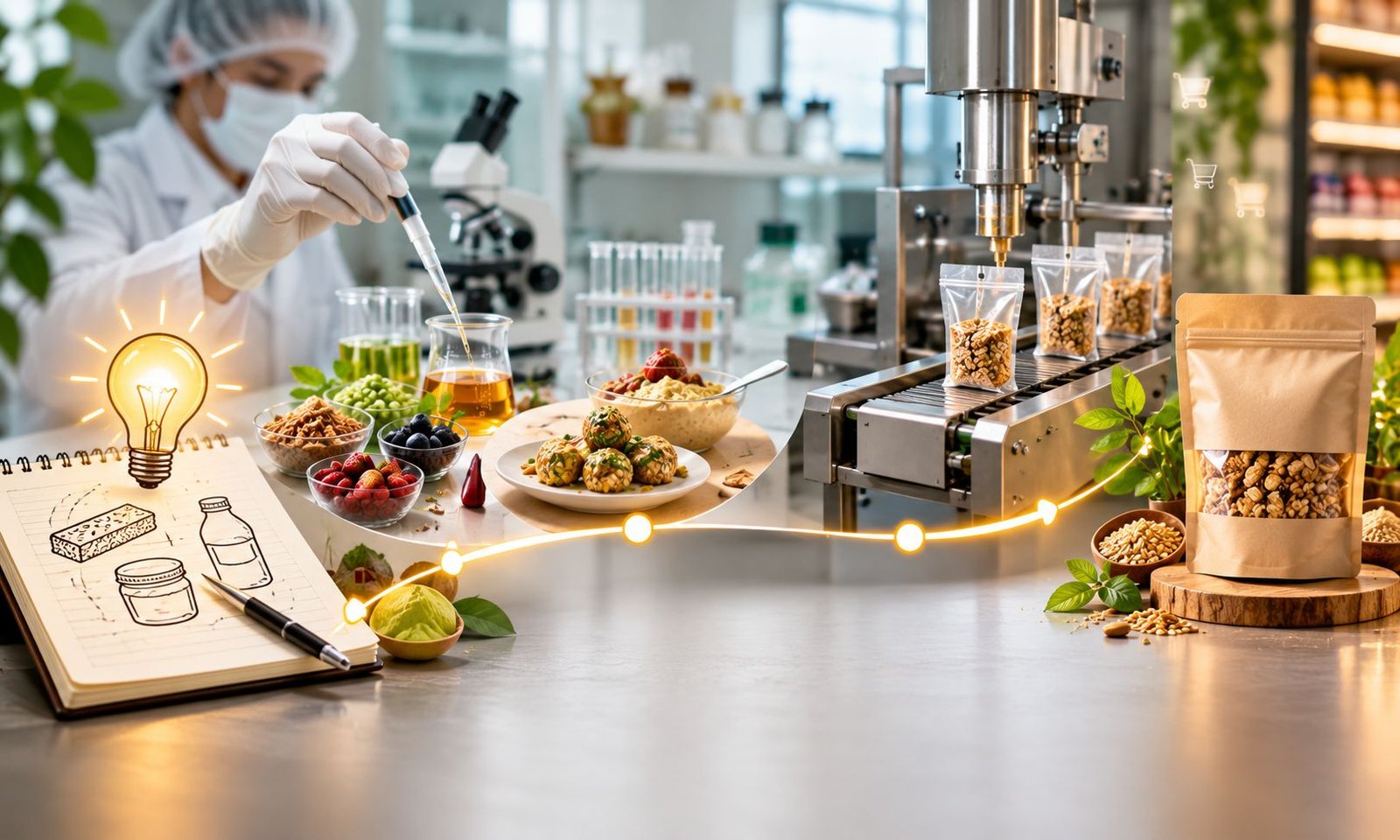
A promising food idea is only the beginning. Turning it into a product customers enjoy, retailers can stock and a manufacturer can produce consistently requires a structured development process. Food startups and established brands alike benefit from testing assumptions early, documenting decisions and validating the product before scaling.
1. Start with the customer and the market
Define the audience, need state, price range, use occasion and competing products before finalising a recipe. Review customer feedback, ingredient trends, pack sizes and competitor positioning. The aim is to establish a clear product proposition—not simply to create another version of what is already available.
2. Translate the concept into a product brief
A practical brief records the product format, target consumer, sensory expectations, nutrition goals, target cost, pack type, expected shelf life, production volume and markets of sale. It gives the R&D, procurement, manufacturing and marketing teams a shared reference point.
3. Formulate, prototype and test
Develop initial formulations and assess taste, aroma, texture, appearance and ease of use. Ingredient availability, processing behaviour and cost matter as much as the first tasting. Run structured trials and record each formula change so that results can be reproduced.
4. Validate processing and scale-up
A kitchen prototype may behave differently on commercial equipment. Pilot trials help identify mixing, heating, cooling, filling, sealing or texture challenges before full production. Process parameters should be documented, and the product should be assessed under realistic manufacturing conditions.
5. Confirm safety, shelf life and labelling
Determine which microbiological, chemical, physical, nutritional and packaging checks are appropriate for the product. Shelf-life claims should be supported by a suitable study rather than guesswork. Review ingredient declarations, allergen information, nutrition information and other label requirements for the intended market.
6. Prepare for launch
Before launch, align the final specification, approved suppliers, manufacturing instructions, quality checks, packaging artwork, cost model and production plan. Collect early market feedback and use it to guide controlled improvements.
How MyFoodXpert can help
MyFoodXpert supports food businesses with product development, pilot manufacturing, shelf-life studies, contract manufacturing and related technical services. The right support depends on the product category, target market and stage of development.
Conclusion
A disciplined development process helps reduce avoidable rework and makes decisions more evidence-based. By connecting consumer needs with formulation, process validation, quality and commercial planning, food businesses can improve their readiness for launch.
Call to action
Planning a new food product? Contact MyFoodXpert to discuss your product concept, development needs and next steps.