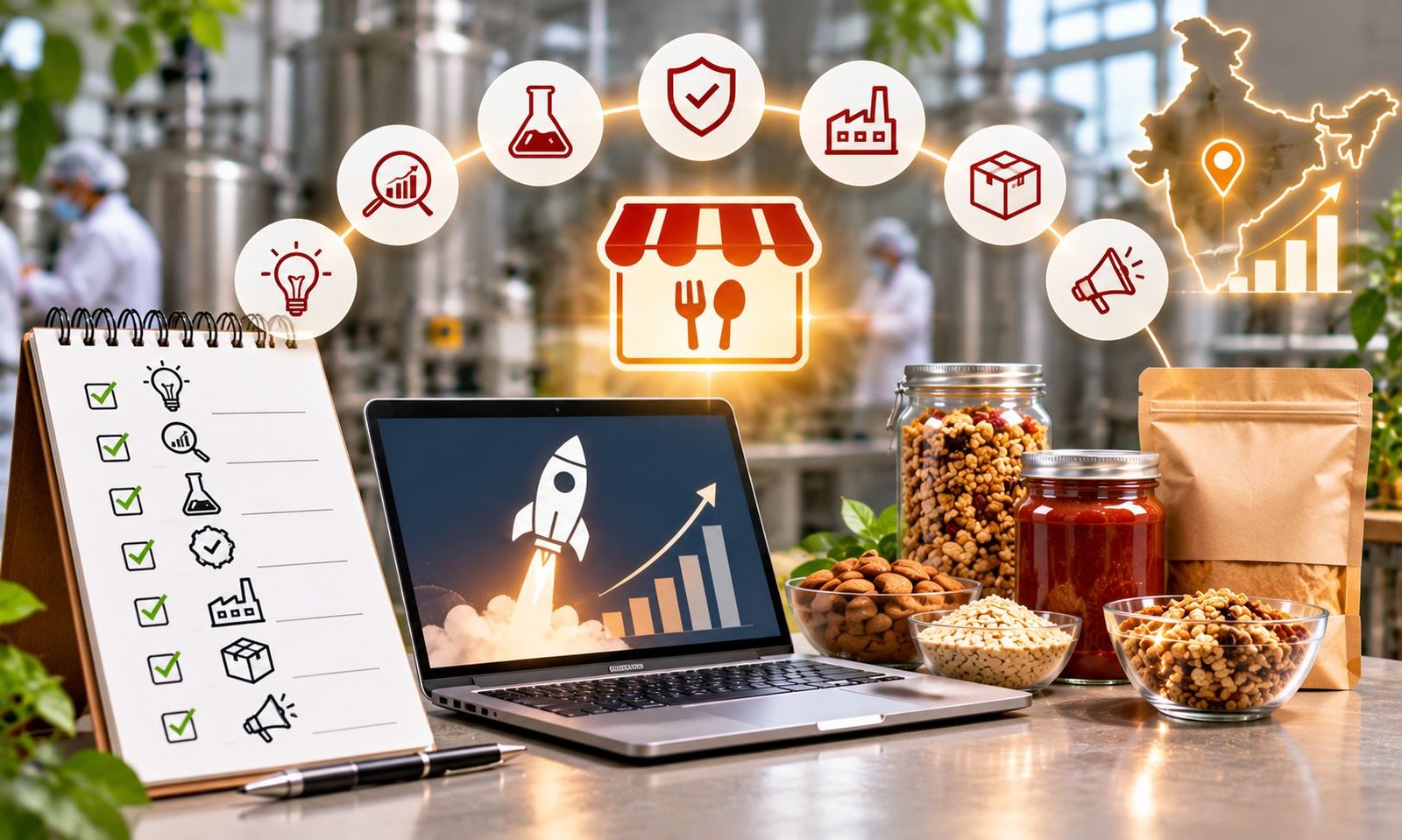
Turning a recipe or food concept into a viable business requires more than a good product. Entrepreneurs need to validate demand, understand costs, arrange suitable production, meet applicable requirements and build a route to customers. Planning these areas early can prevent expensive changes later.
1. Validate the market
Define your target customer, buying occasion, price point and reason to choose your product. Review competitors, pack sizes, retail or online channels and customer feedback. Use small-scale research to test assumptions before committing to large production volumes.
2. Build a realistic cost model
Estimate ingredient, packaging, processing, labour, testing, freight, storage, channel margins, marketing and returns. Calculate the expected contribution per unit and model different sales volumes. A product that looks profitable at the factory gate may have a different margin after distribution and promotions.
3. Finalise the product and process
Create a documented formula and product specification. Assess ingredient sourcing, sensory quality, production feasibility and the controls required for consistent batches. If you intend to work with a contract manufacturer, discuss minimum quantities, responsibilities, formula ownership and scale-up before finalising the plan.
4. Check applicable registrations and compliance
Food businesses in India should determine the appropriate FSSAI registration or licence and other legal requirements based on their business activity, scale and location. Labelling, weights and measures, tax, packaging and other obligations may also apply. Verify current requirements with the relevant official authorities or qualified advisers; do not assume one checklist fits every business.
5. Validate safety, shelf life and packaging
Plan suitable testing and establish evidence for the product’s storage conditions and shelf-life claim. Ensure that packaging protects the product and that the label information is accurate for the product and intended market.
6. Choose a production route
Compare own-facility production, shared facilities, pilot manufacturing and contract manufacturing. Consider investment, control, capacity, minimum order quantities, quality systems and the flexibility to change the product as you learn.
7. Prepare for launch and feedback
Set up supplier records, batch traceability, customer support, inventory planning and a process for handling complaints. Start with a manageable launch, monitor repeat purchases and feedback, and make improvements based on evidence.
Explore official support carefully
India’s Ministry of Food Processing Industries publishes information on schemes and support for the sector. Eligibility, application windows and scheme conditions can change, so check the current official portal before making financial plans.
How MyFoodXpert can help
MyFoodXpert provides food-industry consulting and related services such as product development, pilot manufacturing, contract manufacturing and shelf-life studies. Support can be discussed based on the product concept and stage of the business.
Conclusion
A successful launch combines customer validation with technical readiness, compliance, realistic economics and reliable production. Build a checklist around your specific product and confirm requirements before investing heavily.
Call to action
Developing a food startup or preparing your first product launch? Contact MyFoodXpert to discuss the next steps.