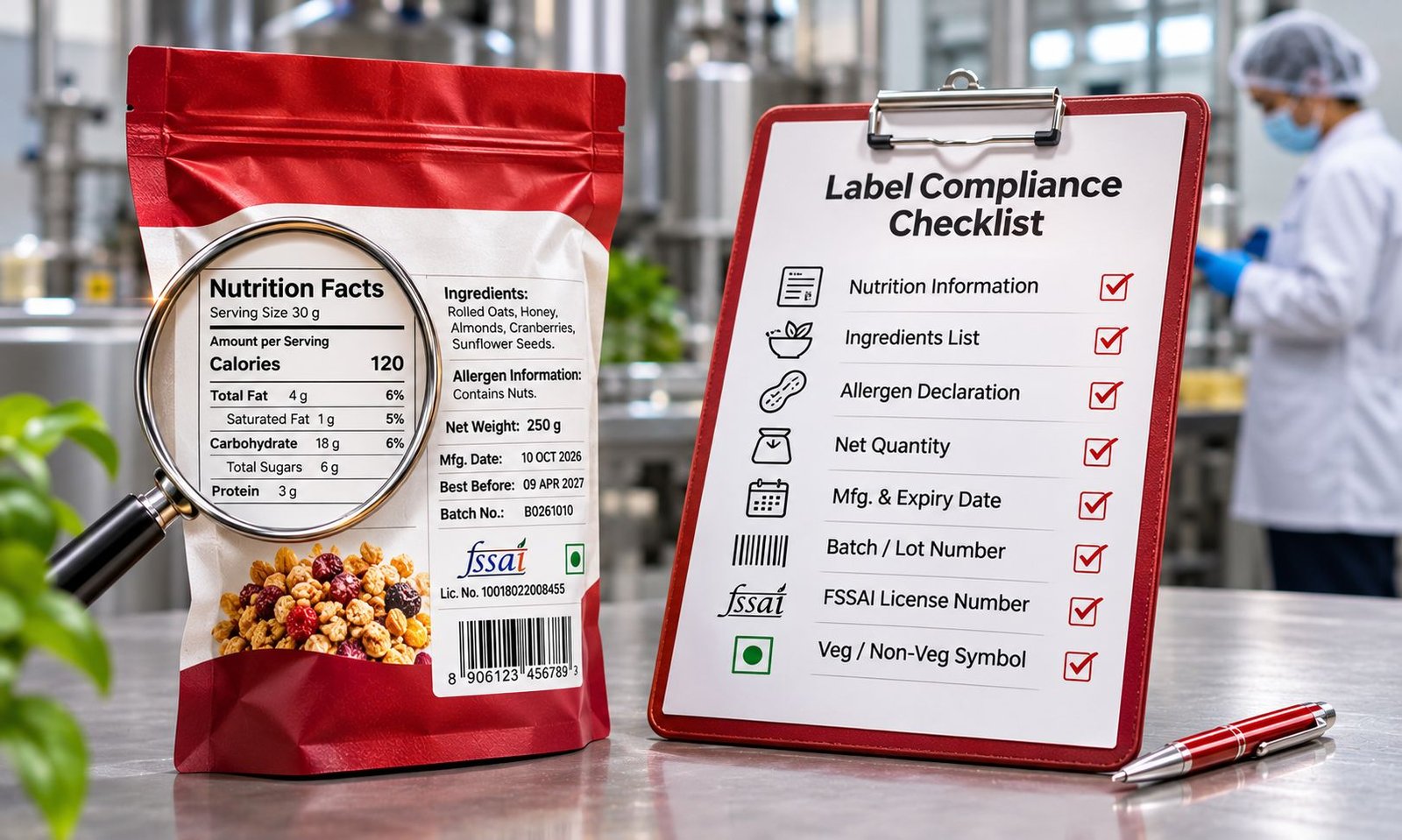
A food label is both a consumer information tool and a regulated part of the product. Errors can lead to artwork reprints, delayed launches, marketplace issues or compliance action. Brands should review label content early and confirm the applicable rules for the product category and sales market before printing.
Start with the correct product identity
Check that the product name accurately describes the food and is consistent with its formulation and category. Confirm the ingredient list, ingredient order and any required declarations against the final approved recipe and applicable regulations.
Review allergens and cross-contact risks
Identify allergens present in ingredients and assess whether cross-contact controls or declarations are relevant. Allergen wording and formatting requirements differ by jurisdiction, so do not copy labels from another market without review.
Verify nutrition information and claims
Nutrition information should be based on appropriate data and meet the requirements that apply to the product. Claims such as ‘high protein’, ‘low sugar’, ‘natural’ or ‘source of fibre’ should not be used casually; each claim may have specific conditions or evidence expectations. Review all front-of-pack and promotional claims, not just the nutrition panel.
Check mandatory declarations and legibility
Depending on the product and market, the label may need details such as net quantity, manufacturer or marketer information, batch identification, date marking, storage instructions, directions for use and licence details. The exact requirements depend on the product and applicable rules. Check font size, contrast, placement and language requirements as well.
Confirm the final artwork matches the approved product
A label review should use the final formula, final supplier information and final packaging artwork. Changes to ingredients, serving size, product claims or target markets may trigger another review. Keep a version-controlled approval record.
For products sold in India
Food brands should consult the current FSSAI regulations and relevant product-specific standards, alongside other applicable Indian requirements. Requirements can change and may differ across product categories, so this article is a planning checklist—not a substitute for a regulatory review.
How MyFoodXpert can help
MyFoodXpert supports food businesses with product development and food-industry consulting. Businesses preparing a launch can discuss their product and the technical or compliance support they require.
Conclusion
Label compliance should be built into product development rather than left until the day packaging is printed. A documented review helps reduce rework and supports clear, accurate communication with consumers.
Call to action
Preparing packaging artwork for a new food product? Contact MyFoodXpert to discuss your product-development and compliance support needs.