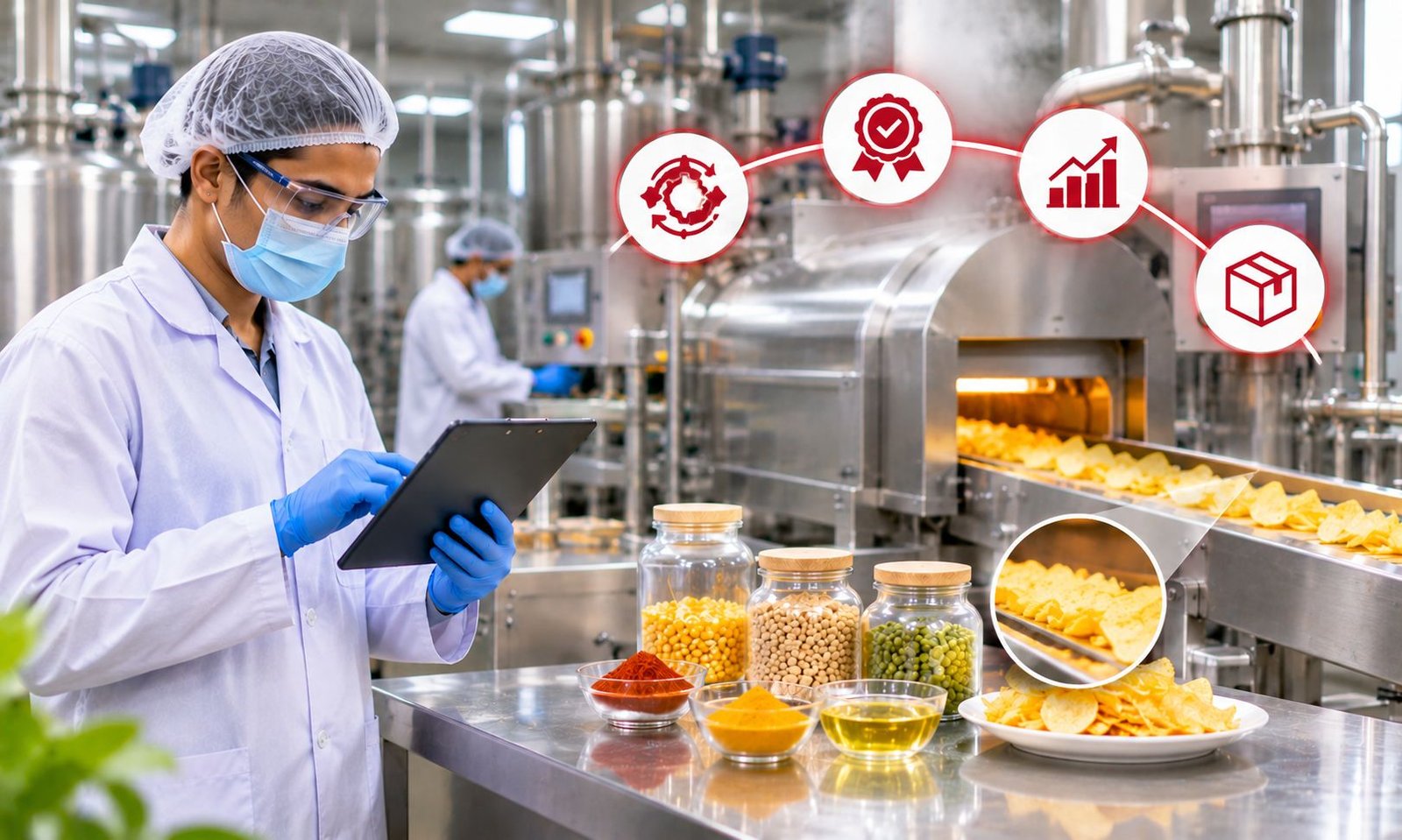
Processing technology influences the safety, texture, flavour, shelf life and cost of a food product. The most advanced equipment is not automatically the best choice for every business. Manufacturers should select processes based on the product, target market, production scale and evidence that the process can deliver the required result.
Start with the product and process objectives
Define the outcome the process must achieve: for example, a target texture, moisture level, microbial control, particle size, filling accuracy or production capacity. Consider ingredient sensitivity, expected batch size, cleaning requirements and the product’s intended storage conditions.
Compare options using practical criteria
Assess throughput, energy and water use, labour, maintenance, cleaning, changeover time, yield, waste and operator skill requirements. Include the full operating cost rather than focusing only on purchase price. Check whether the equipment can accommodate likely product variations and future volumes.
Validate product quality and safety
A process should be evaluated using suitable measurements and acceptance criteria. Depending on the food, these may include temperature profiles, time, moisture, pH, texture, sensory properties, microbiological results or packaging performance. Product safety should never be assumed from equipment specifications alone.
Plan for scale-up and integration
A process that works in a small trial may not transfer directly to a larger line. Differences in heat transfer, mixing, residence time, filling and cooling can affect outcomes. Pilot trials and process documentation help teams understand the variables that must be controlled during scale-up.
Consider maintenance, hygiene and people
Equipment should be appropriate for food use and designed to support effective cleaning and maintenance. Consider spare parts, technical support, training, safe operation and the time required for sanitation. A process that is difficult to clean or maintain can create recurring operational challenges.
Measure performance after implementation
Track output, yield, downtime, rejected product, utility use, cleaning time and customer complaints. Compare actual results with the original business case and use the findings to refine operating procedures.
How MyFoodXpert can help
MyFoodXpert works with food businesses on product development, pilot manufacturing and related consulting needs. The right process or technology depends on product characteristics, capacity goals and facility requirements.
Conclusion
Effective process selection balances product performance, safety, operational practicality and long-term cost. A structured assessment and controlled trial can help businesses make better-informed investment decisions.
Call to action
Assessing processing options for a new or expanding food operation? Contact MyFoodXpert to discuss your project.